
A good glamping break should begin with the exciting question, “Which snacks are coming?” not the grim realisation that you have somehow packed three torches, no socks and half the garage. Knowing how to pack for luxury camping means bringing what makes your stay comfier, cosier and more fun – while leaving the expedition-level clutter at home.
Whether you are bedding down in a converted American School Bus, plotting a family escape or gathering the gang for a wonderfully silly weekend away, luxury camping is not traditional camping with a fancier blanket. Your bed, shelter and the basics are usually already sorted. That leaves more room in the car for the good stuff: proper clothes, excellent food, a board game that gets unnecessarily competitive and perhaps a bottle of something fizzy for the hot tub.
Start with the stay, not a generic camping list
Before you pack a single bag, check what is included at your accommodation. This is the secret to travelling light without turning up underprepared. A glamping stay may come with beds, bedding, cooking equipment, heating, electricity and communal facilities, but every site has its own set-up.
If your stay has a proper kitchenette, there is no need to arrive with a camping stove strapped to your shoulder like you are crossing the Pennines. If towels are supplied, brilliant. If there is a fire pit but no fuel included, that is useful to know before you start dreaming of toasted marshmallows. Read the welcome information, then pack to fill the gaps rather than duplicating an entire household.
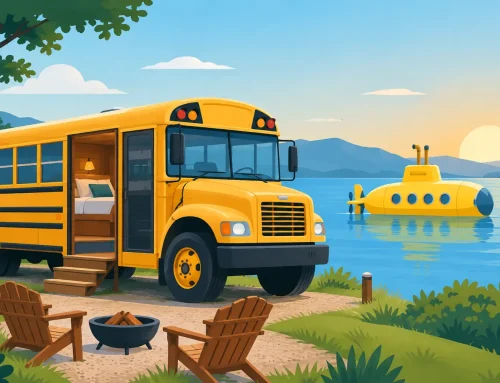
For stays at American School Bus Glamping, think character-packed accommodation and countryside fun rather than roughing it. The point is to enjoy the bus, the Yellow Submarine and all the little moments around them – not to spend an hour locating a missing tent peg.
Pack clothes for British weather with a sense of humour
British weather likes to keep everyone humble. A glowing afternoon can become a chilly evening remarkably quickly, especially in Somerset or Devon, so layers are the real VIPs of your bag.
Bring comfortable daytime clothes you can move about in, plus a warm jumper or fleece for after sunset. A lightweight waterproof is much more useful than crossing your fingers at the forecast, and closed-toe shoes or trainers are sensible for exploring, field games and trips to the loos after dark. Wellies are worth considering if rain is on the cards, particularly with children who regard puddles as a personal invitation.
You do not need a suitcase full of outfit changes, but it is lovely to bring one thing that makes you feel a bit special. A favourite shirt for dinner, a colourful dress for a photo, or matching pyjamas for the kids can turn an ordinary evening into part of the story. Glamping is allowed to be a little bit extra.
Do not forget your hot-tub kit
If your stay includes a hot tub, sauna or ice bath, make a tiny wellness bag before you leave. Pack swimwear, flip-flops, a cover-up, a reusable water bottle and a hair tie if you need one. A warm robe is a top-tier choice for stepping out into cool evening air, although an oversized hoodie also does the job nicely.
If you are travelling with little ones, add swim nappies where needed and a spare set of dry clothes. Nobody wants a damp car seat as the final souvenir of a brilliant break.
The luxury camping essentials that earn their place
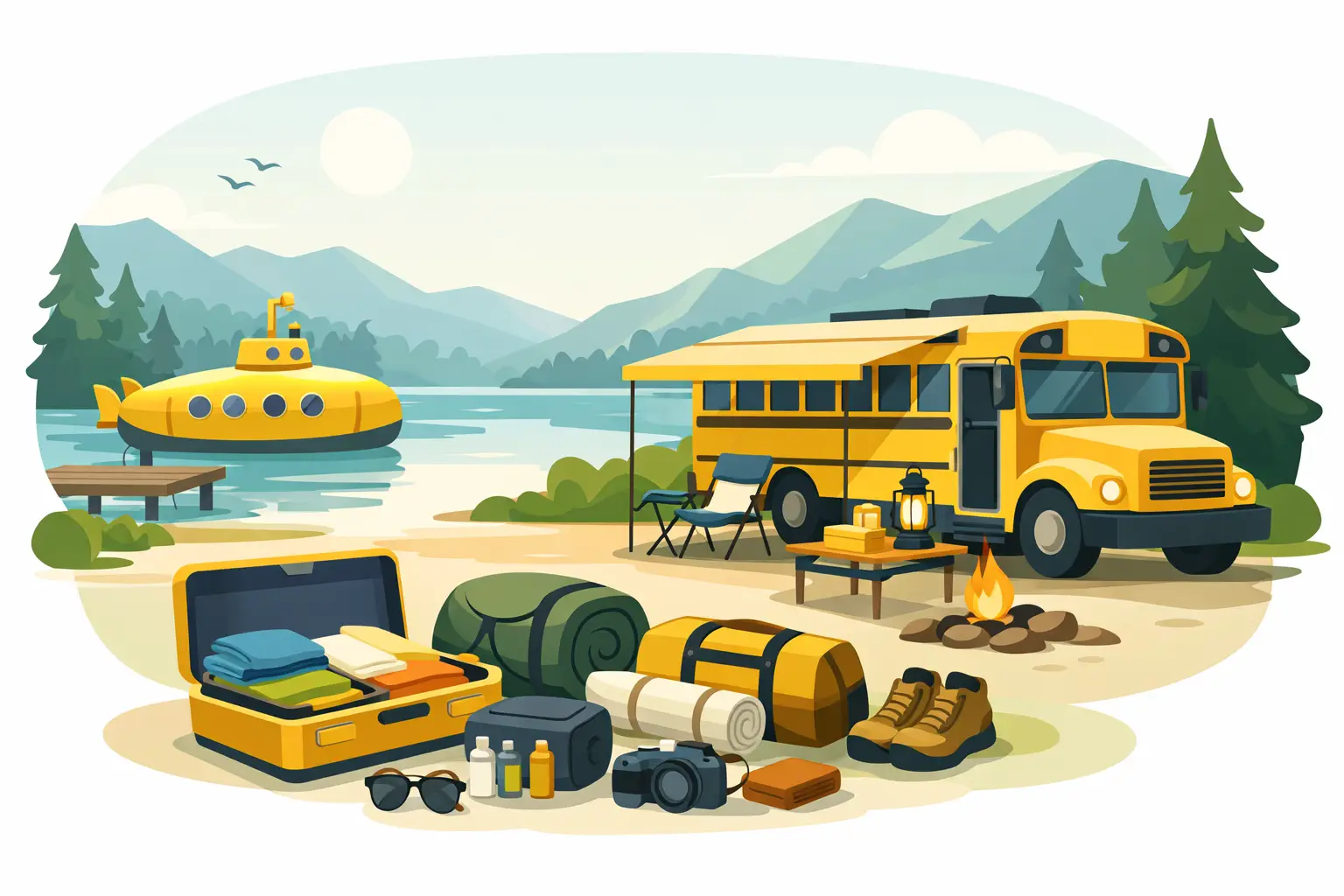
The best answer to how to pack for luxury camping is not “bring everything”. It is “bring the things that improve the moments between activities”. You are building a cosy little weekend rhythm: slow breakfasts, muddy walks, card games, late chats and snacks that mysteriously taste better outdoors.
A small day bag is useful for exploring nearby villages, beaches or woodland paths. Fill it with water, tissues, sun cream, plasters and a portable charger. Even on a short UK break, sun cream belongs in the bag. Sunshine may be sporadic, but it can still catch you out when it makes an appearance.
For evenings, bring a torch or head torch if the site is dark, especially when travelling with children. A soft lantern can add a lovely glow to an outdoor table, but do not bring anything with an open flame unless the site rules allow it. Battery-powered fairy lights are lighter, safer and still deliver the cosy factor.
A small tote bag is another unsung hero. Use it for snacks, wet swimming things, shop bits, borrowed games or the collection of stones and leaves your youngest holidaymaker absolutely must take home.
Food should feel like a treat, not a catering operation
Glamping gives you the joy of outdoor eating without requiring you to become a wilderness chef. Keep your food plan simple, generous and easy to store. Choose ingredients that work across more than one meal, such as bread, eggs, fruit, cheese, hummus and salad bits. A couple of easy dinners are plenty for a weekend away.
For a family break, breakfast is the meal worth planning. Cereal, pastries, fruit, tea, coffee and hot chocolate can make the morning feel gloriously low-effort. Add a pack of biscuits for post-walk emergencies and something marshmallow-shaped if there is a suitable fire-pit evening ahead.
Groups may prefer a grazing-board approach: crackers, dips, olives, cheeses and crisps are sociable, quick and do not create a mountain of washing-up. Couples can keep it wonderfully simple with a favourite bottle, a proper pudding and something easy to cook together.
Check whether there is a fridge, freezer space and cooking equipment before filling a cool box. If those are provided, you may only need a few chilled bits for the journey. If not, a compact cool bag with ice packs is a much more sensible choice than trying to wedge a giant picnic hamper into the boot.
Bring reusable bits, skip the clutter
A reusable water bottle, coffee cup and food containers are practical for days out and kinder to the countryside. They also save you from buying bottled drinks every time someone announces they are “absolutely parched” five minutes into a walk.
Leave the disposable party-shop mountain at home. If you are celebrating a birthday or special escape, bring a few decorations with maximum impact: bunting, a banner or one silly hat for the birthday person. The accommodation is already the main character. It does not need a balloon arch competing for attention.
Make room for the fun nobody plans for
The unforgettable bits are often the ones that happen when no one is looking at a timetable. Pack a pack of cards, a compact board game or a notebook for rainy-day drawing and holiday doodles. A football, frisbee or bubbles can keep children happily occupied, provided there is space and site rules permit it.
For teenagers, a portable speaker can be great for a pre-dinner playlist, but keep the volume neighbour-friendly. Campsites carry sound, and everyone deserves their own version of a peaceful evening. Headphones are a clever backup for quiet time inside.
Bring a book if that is your idea of bliss, but do not feel pressured to fill every hour. A luxury camping break is one of the rare occasions when sitting outside with a cuppa, watching the sky change colour and doing very little is a perfectly respectable plan.
Pack smarter for families, couples and groups
Families benefit from one shared “grab bag” that stays by the door. Put wipes, snacks, sun cream, spare layers, a torch and plasters inside. It cuts down on the classic chorus of “Where is my coat?” just as everyone is ready to go.
Couples can travel lighter, but should agree on the practical bits before departure. One person packing all the snacks while the other assumes somebody else packed phone chargers is a very avoidable plot twist. Bring a cosy layer each, something for the tub if applicable and one treat that feels properly indulgent.
For friendship groups, divide food and practical extras in advance. Ask one person to bring breakfast supplies, another to sort drinks and another to handle games or snacks. It is not military planning – it simply prevents six bags of crisps and no coffee.
A final pre-car check
Before setting off, check you have your booking details, keys if needed, wallets, medication, chargers and weather layers. Then stop. You are going glamping, not relocating.
Leave a little breathing room in the boot for muddy shoes, farm-shop finds and the odd unexpected treasure. The best thing to pack is a willingness to be slightly less scheduled than usual: switch off, get silly, stay cosy and let the unusual accommodation do what it does best – give everyone a story worth retelling.