

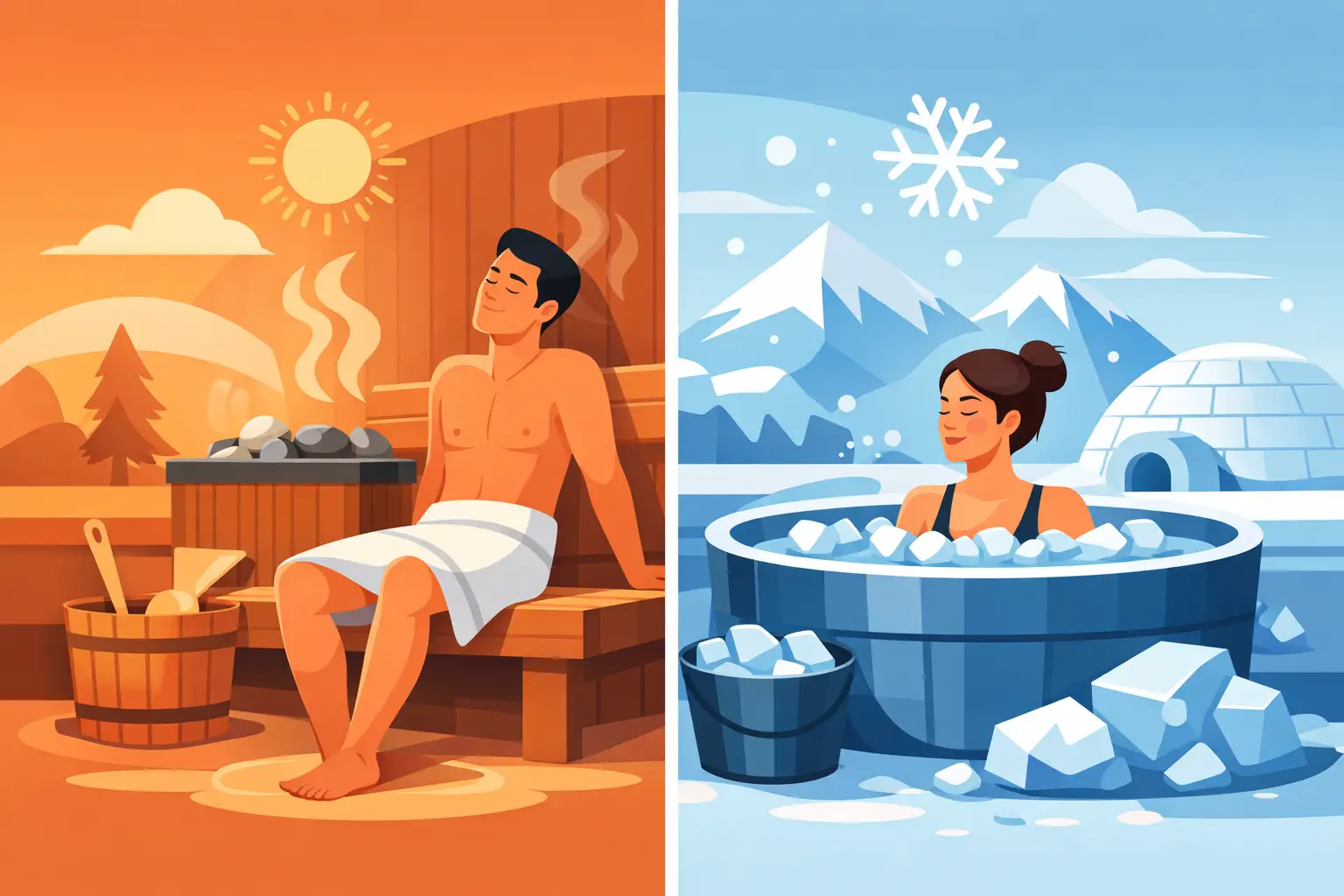
You have swapped the usual four walls for a yellow school bus or a submarine-shaped sleepover, the countryside is doing its dramatic green thing, and there is one gloriously tricky decision left: sauna versus ice bath. Do you climb into proper toasty bliss, or take a breath and lower yourself into water cold enough to make your eyebrows reconsider their life choices?
Neither is simply “better”. They create very different moments, and the right choice depends on whether your holiday mood is more slow-and-snoozy or bold-and-buzzing.
Sauna versus ice bath: the quick answer
Choose a sauna when you want to relax, warm up after a blustery walk, ease into a quieter evening, or share an unhurried chat without everybody chattering their teeth. The heat can feel comforting for tired muscles, and a sauna session naturally encourages you to slow down.
Choose an ice bath when you are after a short, exhilarating challenge and the clear-headed, wide-awake feeling that often follows. It can be a brilliant shared memory for friends, couples and suitably adventurous grown-ups – especially when someone claims they will stay in “for ages” and is out again with surprising speed.
The two can also work beautifully together. A gentle sauna followed by a brief cold plunge is often called contrast therapy. It is less about collecting wellness bragging rights and more about noticing how your body responds to warmth, cold and rest.
What a sauna feels like
A sauna is the easier sell on a British break. Outside, Somerset or Devon may be serving drizzle, a nippy breeze or one of those glorious evenings when the sky is blue but the grass is definitely not warm. Inside, there is heat, stillness and the small luxury of having absolutely nowhere else to be.
As your body warms up, blood vessels near the skin widen and your heart rate may rise a little. Many people find the warmth soothing after walking, cycling, paddleboarding or an enthusiastic family game that got unexpectedly competitive. You will sweat, feel loose and sleepy, and may emerge with that pleasantly floppy feeling normally reserved for Sunday afternoons.
A sauna is not a magic detox chamber, despite what every dramatic wellness reel would have you believe. Sweating is a normal way for the body to regulate temperature, while your liver and kidneys do the heavy lifting when it comes to processing waste. The genuine appeal is simpler: it feels good, offers a pocket of calm and can help you switch gears from activity to relaxation.
For couples, it can turn an ordinary evening into a little ritual. For groups, it is a chance to sit back, laugh and relive the day’s best bits. For parents, it may be that rare grown-up pause once the little ones are settled and the campsite volume has finally been turned down.
Sauna sessions: keep it comfortable
There is no medal for staying in until you resemble a steamed dumpling. Start with a short session, around five to 10 minutes if you are new to it, and step out when you feel uncomfortable. Cool down gradually, drink water and give yourself time before going back in.
Skip the sauna if you feel unwell, dehydrated or light-headed. Alcohol and high heat are a spectacularly poor pairing, even if you are technically on holiday. Anyone who is pregnant, has heart or blood-pressure concerns, or takes medication that affects circulation should check with a healthcare professional first.
What an ice bath feels like
An ice bath is not subtle. Your first instinct may be to make a noise normally heard only when someone drops a plate at a dinner party. The cold triggers an immediate gasp response, your breathing speeds up and every sensible part of your brain starts drafting an exit plan.
If you stay calm, breathe slowly and keep the session brief, that initial shock can settle into an intense but focused experience. Once you are out, wrapped in a towel and back in the fresh air, many people report feeling energised, proud and oddly cheerful. It is a tiny act of holiday courage with a very good photo opportunity attached.
Cold-water immersion is popular after exercise because it may reduce the feeling of muscle soreness for some people. That does not mean it is essential for recovery, nor that more cold equals more benefit. If you are strength training hard and trying to build muscle, frequent ice baths immediately after every session may not suit your goals. On a leisure break, though, the point is usually less scientific optimisation and more the thrilling, wake-up-your-whole-face sensation.
Ice bath basics: brave, not reckless
Cold exposure deserves respect. Start with cool water rather than an aggressively icy plunge, particularly if it is your first time. Keep your head out of the water, enter slowly, focus on long exhales and get out while you still feel in control. For many beginners, even 30 seconds to two minutes is plenty.
Warm up afterwards with dry layers, gentle movement and a warm drink. Avoid jumping straight into scorching heat if you feel faint or overly chilled. Never use an ice bath alone, never make it a drinking-game challenge, and do not pressure a reluctant mate into taking the plunge. A dramatic “absolutely not” from the sidelines is a perfectly valid contribution to group wellness.
People with heart conditions, uncontrolled high blood pressure, circulation problems, Raynaud’s phenomenon, diabetes-related nerve issues, a history of fainting, or pregnancy should seek medical advice before trying cold immersion. Children should not use ice baths unless a qualified professional has advised it and close supervision is in place.
Should you combine sauna and ice bath?
For many healthy adults, a sauna followed by a brief cold dip can be an enjoyable contrast. Heat relaxes you; cold wakes you up; the fluffy robe afterwards feels like a major life achievement. But contrast therapy is optional, not compulsory. There is no need to force a dramatic hot-cold-hot-cold circuit just because somebody on social media has acquired a stopwatch and a very serious expression.
A gentler version works well: enjoy a short sauna, cool down in fresh air or with a lukewarm shower, then decide whether an ice bath actually sounds fun. Listen to your body rather than following a rigid protocol. Feeling dizzy, nauseous, numb, confused or unusually short of breath is your cue to stop and warm up or cool down safely.
Match the ritual to your kind of getaway
If your ideal short break involves slow mornings, countryside walks, a good book and chatting until the stars appear, the sauna probably wins. It suits the soft, cosy side of glamping – the part where comfort is not an afterthought but the whole blooming point.
If your group loves a challenge, a laugh and a story to take home, the ice bath may steal the show. It gives everyone a personal victory, whether that means two brave minutes in the water or simply dipping a toe in and deciding tea is the superior wellness practice.
At American School Bus Glamping, that is the joy of adding a little heat or a little chill to an already far-from-ordinary stay. You are not booking a laboratory experiment. You are making room for a moment that feels different from daily life – preferably one involving fresh air, rosy cheeks and someone saying, “I cannot believe I actually did that.”
A few sensible final pointers
Hydrate before and after either experience, especially if you have been active in the sun. Eat normally, avoid alcohol beforehand and give yourself plenty of recovery time. Do not treat discomfort as proof that it is working: warmth should feel pleasantly warm, and cold should feel challenging but manageable.
Most of all, choose the experience you are genuinely looking forward to. The best wellness ritual on a glamping break is the one that leaves you feeling happier, calmer or gloriously alive – then sends you back to your quirky home-from-home ready for the next memory.