
A family reunion can be brilliant chaos: cousins inventing games nobody understands, grandparents retelling the legendary holiday disaster, and someone inevitably asking who brought the potato salad. That is precisely why learning how to host family reunion gatherings well is less about military-grade organisation and more about giving everyone a comfortable place to reconnect.
The goal is not to create a flawless event with colour-coded name badges and a timetable that would frighten a festival manager. It is to make space for proper conversations, belly laughs and the sort of shared moments that become family folklore. A little planning simply stops the fun bits being swallowed by logistics.
How to Host a Family Reunion Without the Fuss
Start by deciding what kind of reunion you are actually hosting. A Sunday lunch at a local pub, a garden gathering and a full weekend away are all family reunions, but they need wildly different amounts of planning. Be honest about your appetite for organising. If you want to enjoy the event rather than spend it washing up and directing cars, a shared getaway can be the sensible choice.
A weekend works particularly well for families spread around the country. It gives people time to arrive, settle in and catch up without forcing every meaningful conversation into one slightly frantic afternoon. It also makes room for different energy levels. Early risers can take a walk, teens can disappear into their own world for an hour, and the chatty contingent can keep the kettle busy.
Before you book anything, choose a rough date range and ask the people who matter most. You will never find a weekend that suits every single relative, especially once school terms, shift work and football fixtures enter the chat. Pick a date that works for the key generations, give plenty of notice, then commit. Waiting for unanimous approval is how reunions quietly vanish into the family WhatsApp abyss.
Choose a Venue That Does Some of the Entertaining
The right venue changes everything. A big house might suit a quieter family who want long meals around one table. A village hall can be handy for a daytime get-together. For a multi-generational weekend, look for a place with enough room to gather but enough character that nobody feels trapped in a beige box together.
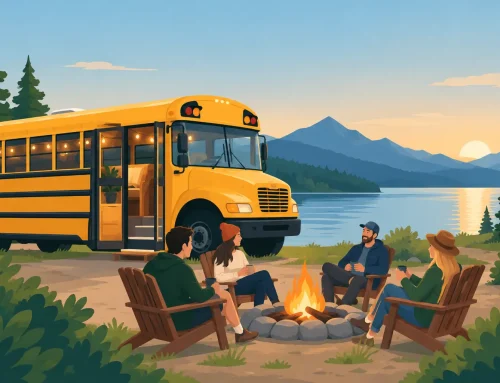
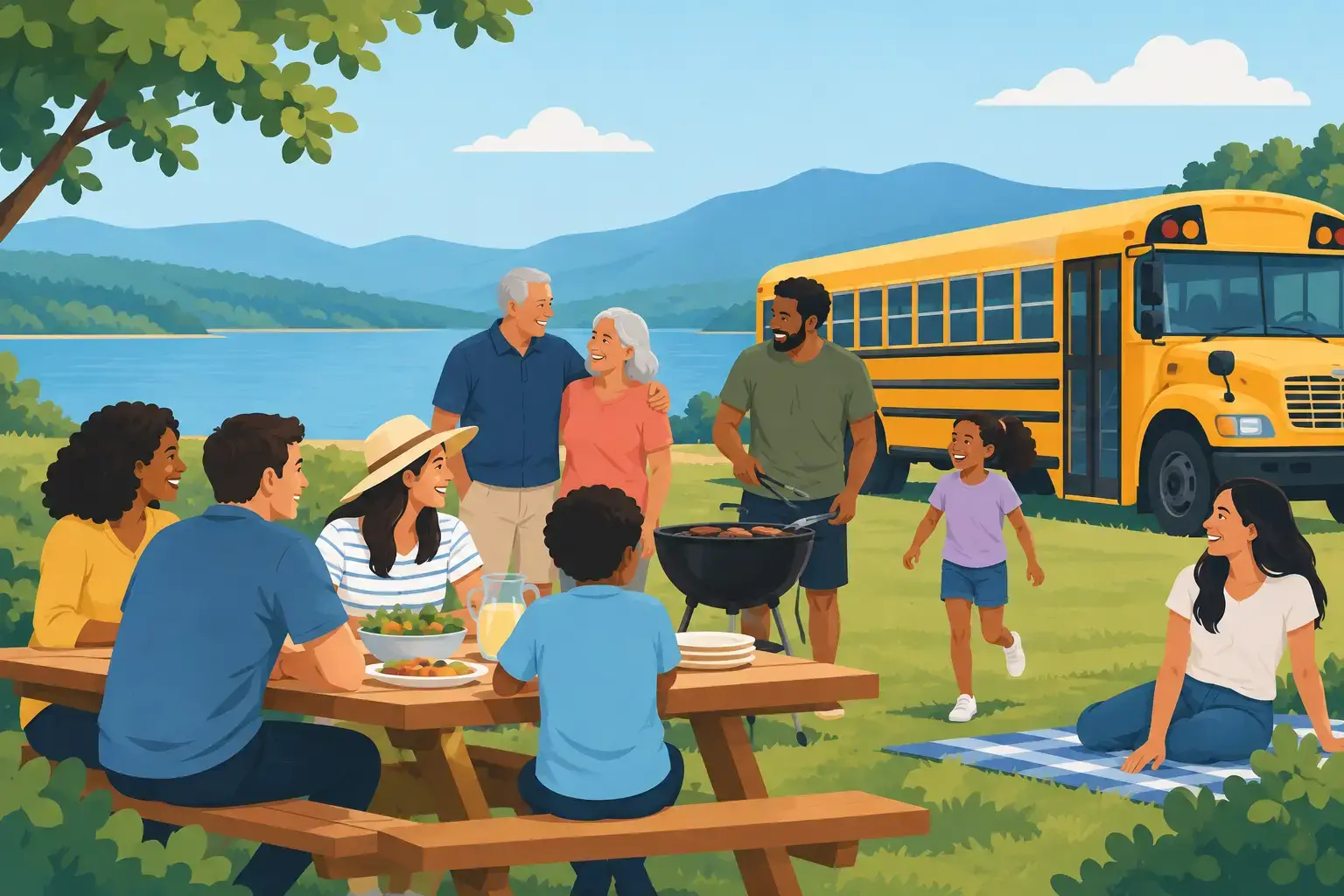
Accommodation with communal outdoor space is a winner because children can burn off energy while adults actually finish a sentence. Think picnic tables, a fire pit, grassy space and places to retreat when your lovely Uncle Dave has told his third story about the M5. If the setting has memorable features built in, it also removes pressure from you to invent entertainment every waking minute.
A quirky glamping stay can be especially good for this. At American School Bus Glamping, for example, the converted buses and Yellow Submarine bring instant talking points before anyone has unpacked a biscuit tin. A hot tub, sauna or ice bath can make the grown-ups feel they have bagged a proper escape too, rather than merely relocated the usual family admin to a field.
When comparing venues, check the practical bits before falling in love with the photographs. Ask about sleeping arrangements, parking, accessible facilities, cooking equipment, noise rules and what happens if the British weather decides to perform one of its damp little tantrums. Charm matters, but so does having enough loos.
Make the Guest List Feel Manageable
A reunion does not need every branch of the family tree in attendance to count. Smaller gatherings are often warmer, easier to arrange and kinder on the budget. Begin with the people who would genuinely enjoy being there, rather than inviting someone purely because it feels politically safer.
Once you know the likely numbers, send a simple invitation with the essentials: date, location, approximate cost, sleeping options and a deadline. Say clearly whether it is adults only, child-friendly, dog-friendly or a mix. Vague plans invite vague replies, which are the natural enemy of deposits.
For a larger group, nominate one person from each family branch as a point of contact. This stops you answering the same question about towels, bedtime and whether Auntie Jean can bring her spaniel seventeen times. It also gives guests a friendly person to ask, rather than making the organiser feel like a very tired customer service desk.
Sort the Money Early and Kindly
Money can make family gatherings awkward if it is left until the last minute. The best approach is straightforward: explain what the total covers, how much each household is paying and when payment is due. If some relatives have more room in their budget than others, build in flexible choices where you can.
For example, guests might pay their own accommodation while everyone chips in for one shared meal. Or the group could bring food for a potluck supper, with one person collecting a small amount for breakfast supplies. There is no single perfect model. It depends on the group, the venue and whether your family considers a supermarket receipt an invitation to a courtroom drama.
Keep extras optional where possible. Not everybody will want a pub lunch, a guided activity or a round of fancy cocktails. Giving people room to opt in means nobody feels priced out of the fun.
Plan a Loose Shape, Not a Minute-by-Minute March
A reunion needs a rhythm, especially when people are arriving at different times. It does not need a clipboard. Pick two or three shared anchor moments, such as a welcome meal on the first evening, a group activity the next day and a relaxed breakfast before people head home.
Everything else can stay flexible. Some families love a quiz full of old photographs and terrible childhood haircuts. Others would rather gather around a fire, play cards and let the conversation wander. If your group includes young children, plan one easy outdoor activity and have a wet-weather back-up. If it includes teenagers, offer choice rather than demanding enthusiasm at 10am sharp.
A useful reunion activity has one job: helping different generations talk to each other. Try a family recipe swap, a playlist where everyone adds one song, or a photo challenge with prompts such as “best matching laugh” and “most dramatic snack selection”. Keep it light. Forced sentiment is rarely the route to heartfelt memories.
If you want a few practical jobs shared out, this is the only checklist you really need:
- One person coordinates arrivals and keys.
- One household handles a main shared meal.
- One willing volunteer brings games or music.
- Everyone takes responsibility for their own bedding, snacks and small humans.
That last point is not cold-hearted. It is how the organiser gets to have a holiday as well.
Feed People Well, Not Fancily
Feeding a crowd is easier when you stop chasing restaurant-level perfection. Choose food that can be prepared ahead, served casually and adjusted for fussy eaters. Big trays of pasta bake, a barbecue if the weather behaves, jacket potatoes with toppings, or a taco-style spread all do the job nicely.
Ask about allergies and dietary needs when people RSVP, then label food clearly. This is one area where guessing is not charming. Have easy breakfast supplies available too, because hungry children and uncaffeinated adults can turn even the most picturesque morning into a minor uprising.
For one special meal, make it communal. Put someone in charge of puddings, ask relatives to bring a family favourite, or create a breakfast table that looks gloriously excessive. Food gives people something to do with their hands while the shy ones warm up, and it often starts the best stories.
Leave Space for the Unexpected Good Stuff
The memories people keep are rarely the bits you scheduled. They are the cousin who taught the little ones a ridiculous dance, the late-night chat nobody expected to have, or the rainstorm that turned everyone into a blanket-wrapped, hot-chocolate-drinking gang.
Take a few photos, but do not spend the whole weekend directing people into formations. Make a shared album afterwards and invite guests to add their own pictures. You will get the polished group shot, certainly, but also the wonderfully wonky evidence of what the reunion actually felt like.
A good family reunion does not need to impress every relative or run like clockwork. Give people a welcoming base, a reason to gather and enough breathing room for their personalities to collide. Then put the clipboard down, grab a chair and join the story while it is happening.