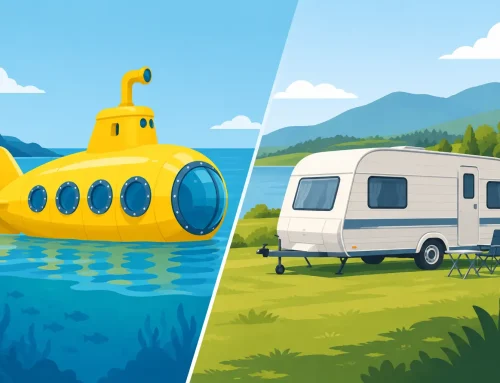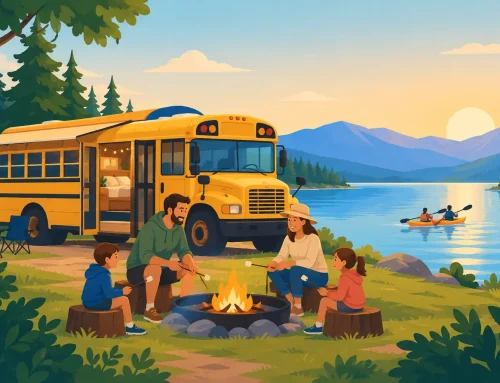


A guide to converted vehicle holidays is not really about finding somewhere to sleep. It is about swapping the predictable hotel room for a former school bus with a story, a vintage van with a view, or perhaps something gloriously yellow and submarine-shaped. You still want a proper bed, hot shower access and somewhere to make tea. You just want them served with considerably more personality.
For families, couples and friendship groups, a converted vehicle stay turns the accommodation into part of the plan. Children get the thrill of sleeping in something they would normally point at from a pavement. Grown-ups get the joy of being somewhere that does not look like every other weekend rental. Everyone gets a holiday photo that is unlikely to disappear quietly into the camera roll.
What makes a converted vehicle holiday different?
A converted vehicle has lived a life before it became your holiday base. That history is part of the charm. Old buses, lorries, railway carriages and quirky vehicles tend to come with clever layouts, curved corners, unexpected windows and a healthy dose of nostalgia. They are compact by nature, which means the best ones feel thoughtfully designed rather than merely squeezed in.
There is a trade-off, of course. You are not booking a six-bedroom country house with a utility room the size of a small post office. Storage can be snug, ceiling heights can vary and everyone needs to be reasonably happy sharing the same adventure. But that closeness is often exactly why these breaks work. Board games last longer, breakfast feels more sociable and nobody vanishes into a separate wing with their phone.
The strongest converted vehicle holidays pair the fun of the vehicle with the ease of a well-run glamping site. Think proper mattresses, electricity, heating, cooking essentials and clean shared facilities, with outdoor space to stretch out once cabin fever threatens. The vehicle provides the wow factor; the practical bits keep the weekend enjoyable after the first excited squeal.
Choosing the right converted vehicle stay
Not all conversions are built for the same sort of break, so start with your group rather than the photographs. A couple may love a tiny, cosy hideaway with a hot tub nearby. A family may need proper sleeping arrangements, room for rainy-day snacks and enough space for children to perform an impromptu bus-driver routine before breakfast.
Check who sleeps where
Look beyond the headline capacity. A stay that sleeps six may include a double bed, bunks and a pull-out bed, which could be ideal for two adults and several children but less appealing for six adults hoping for lie-ins. If you are travelling with teens, ask whether their sleeping area offers a little breathing room. If you are bringing a toddler, consider where a travel cot could realistically go without blocking the kettle. Holiday planning is glamorous like that.
Decide how much outdoor living you want
A converted bus is brilliant in fine weather because you get the best of both worlds: a characterful indoor base and a campsite beyond the door. Look for a private seating area, fire pit or communal spaces where the group can spread out. In Somerset and Devon, a view, a field and a mug of something warm can do a lot of heavy lifting.
But British weather enjoys keeping us humble. Check what happens if rain arrives sideways. Is there indoor seating for everyone? Is there heating? Are the communal facilities close enough for a midnight loo dash without needing an expedition team? A little planning means the drizzle becomes part of the atmosphere rather than the villain of the piece.
Think about the occasion
For a birthday, reunion or family celebration, choose an accommodation type that gives people something to talk about before they have even unpacked. For a quieter couples’ break, consider whether the site has optional extras such as a sauna, ice bath or hot tub, rather than a packed programme you do not need.
Groups should also check the site’s noise expectations. A cheerful evening around a fire is one thing; treating the countryside like a festival campsite at 1am is another. The best memories are made without becoming someone else’s least favourite story.
How to pack for converted vehicle holidays
Packing for a converted vehicle is less about bringing everything and more about bringing the right things. Cupboards and luggage corners are often cleverly used, but they are still finite. Soft bags tend to be easier to stash than hard-shell suitcases, especially in converted buses where every nook has a job.
Bring layers rather than betting the whole weekend on one forecast. Even a sunny day can lead to a chilly evening outside, and warm socks have rescued more glamping trips than anybody likes to admit. A torch is useful for getting about after dark, while slippers make shared facilities and early-morning tea runs feel much more civilised.
For a comfortable, low-fuss stay, pack these four things alongside your usual clothes and toiletries:
- Weather-ready layers, waterproofs and shoes you do not mind getting muddy.
- Easy meals, snacks and a favourite breakfast item, if your accommodation has self-catering facilities.
- Games, books or a pack of cards for slower evenings and surprise rain showers.
- Reusable bottles, picnic bits and towels if you have booked any wellness extras.
Do not overpack entertainment, though. The whole point is that the setting already has a bit of theatre. Let the kids inspect the driver’s area if it is part of the design, hunt for the clever details and invent a backstory for the vehicle. Adults are welcome to do this too. You are on holiday. Standards have been relaxed.
Make the accommodation part of the itinerary
The mistake many people make is treating a quirky stay as somewhere to return to only after a frantic day of sightseeing. Converted vehicle holidays are often better when you leave a little blank space. Have a slow breakfast. Light the fire pit. Take a countryside walk without trying to turn it into a military operation. Come back early enough to enjoy the place you specifically chose.
This matters most when you are travelling with children. A standard hotel room can be a place to endure between activities. A bus, van or other outlandish conversion gives them a basecamp to play in and talk about. That can reduce the pressure to fill every hour with expensive attractions, which is kind to both your wallet and your patience.
Couples can make the most of the same principle in a different way. Cook something simple, switch off notifications and take your drink outside when the light begins to soften. You do not need a dramatic agenda for a memorable weekend. Sometimes a slightly bonkers place to stay is enough of a plot twist.
A guide to converted vehicle holidays for groups
Friendship groups tend to have the most fun when they agree the practical details before anyone arrives. Sort food contributions, decide whether you are cooking one big meal or grazing all weekend, and make peace with the fact that one person will always claim the best bunk. If the group is larger than the vehicle’s main sleeping space, booking neighbouring units can preserve the shared experience without turning bedtime into a game of human Tetris.
Choose a site with communal areas if your group likes company, but do not assume communal means chaotic. A good glamping setting gives you the option of sociable moments and quiet corners. At American School Bus Glamping, for example, the whole idea is that your accommodation brings the grin, while the outdoor setting gives everyone room to breathe.
It also helps to appoint a gentle organiser – not a clipboard-wielding tyrant, just somebody who checks arrival times, brings the bottle opener and remembers the marshmallows. Every group has one. Protect them at all costs.
The little checks that prevent big grumbles
Before booking, read the practical details as carefully as you admire the photos. Check parking, arrival times, what bedding and towels are included, whether pets are welcome, and how close the facilities are. If mobility is a consideration, ask about steps, pathways and the layout inside the vehicle. Character is wonderful, but nobody wants a surprise obstacle course.
Also be realistic about digital expectations. Some countryside stays have patchy signal, and that may be bliss or a logistical issue depending on your plans. Download directions, confirm booking information and save a few offline entertainment options before you leave. Then you can choose to go off-grid rather than accidentally discovering you already are.
A converted vehicle holiday works best when you arrive ready to embrace a few charming quirks. Pack light, leave room in the itinerary and choose a place with enough comfort to keep everyone happy. The best bit is not simply saying you slept in a bus or a submarine. It is remembering the laughter that happened because you did.