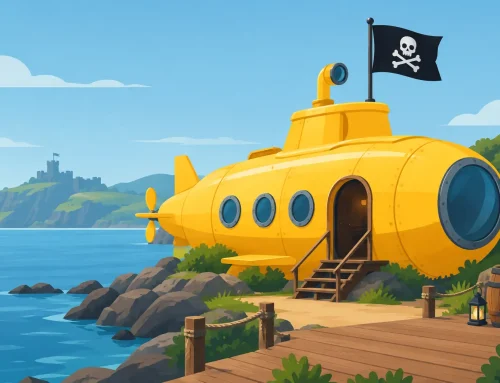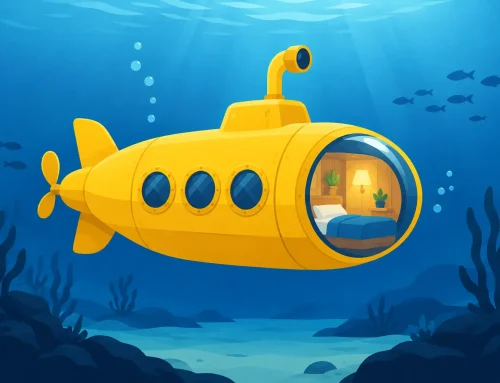

A mobile phone with no signal is suddenly far less interesting when there is a Yellow Submarine to investigate, a field to race across and marshmallows with your name on them. The best family glamping activities do not need military-grade planning or a suitcase full of plastic nonsense. They need room for kids to roam, grown-ups to relax, and just enough silliness to make everyone forget the usual rush of home.
Glamping is particularly good at this because it removes the less glamorous bits of camping. No wrestling a tent in sideways rain. No searching for a missing tent peg while someone gets increasingly hangry. You get proper beds, a memorable base camp and the freedom to spend your energy on the good stuff.
Family Glamping Activities for Big Holiday Energy
1. Let the accommodation become the first adventure
When you stay somewhere with personality, the activity starts before anyone has unpacked their socks. Give children a mini mission: choose their bunk, spot the funniest detail, invent a name for the bus or submarine, and decide where the family photo will happen.
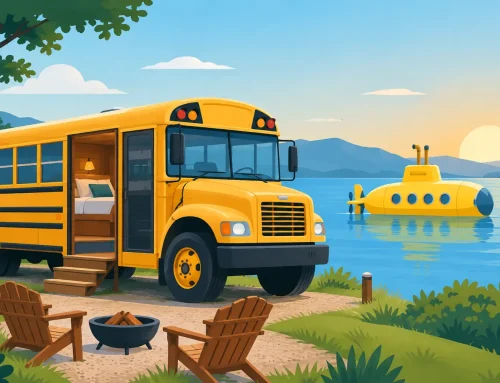
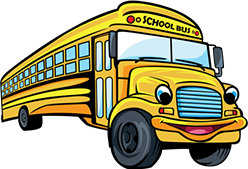
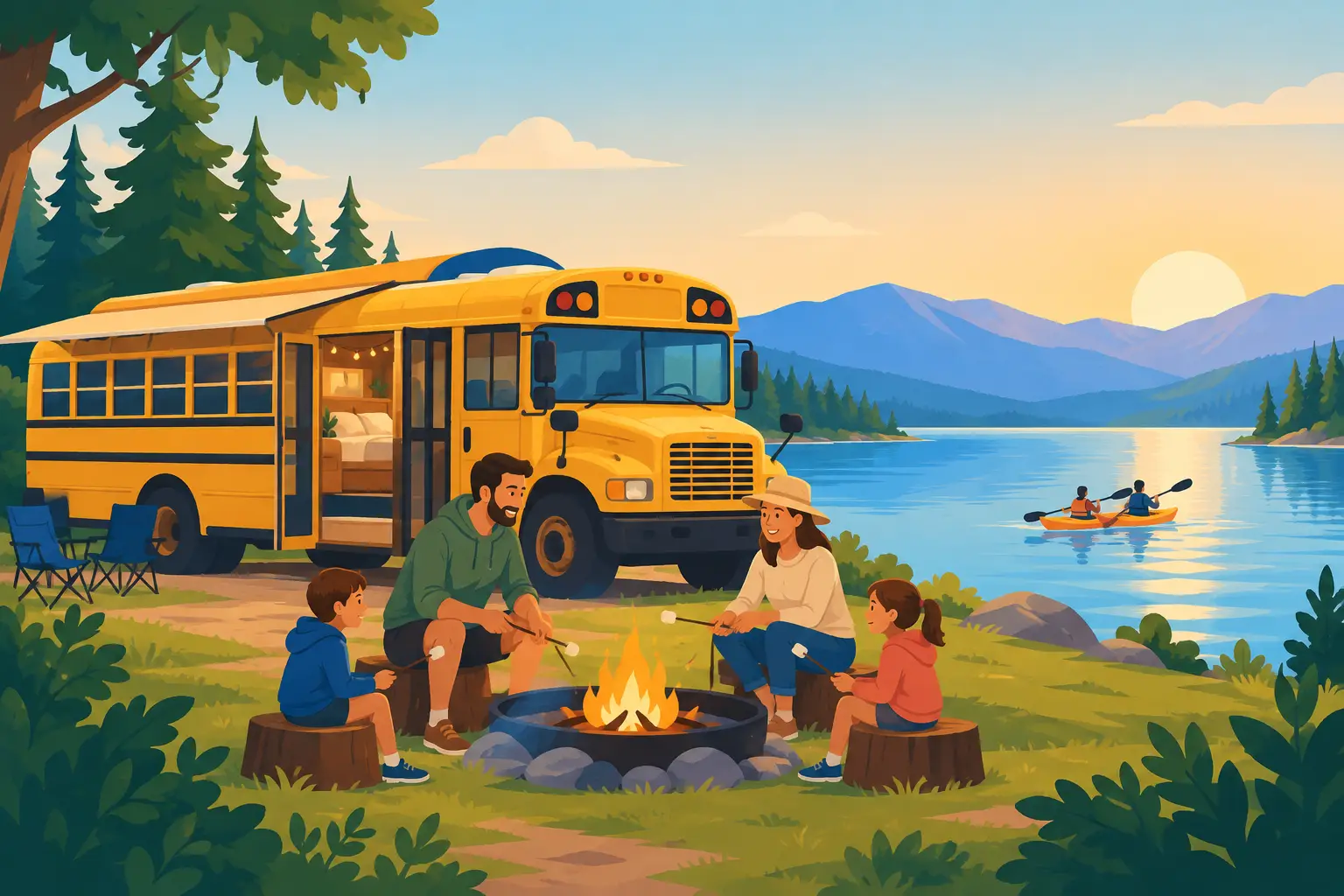
A converted American school bus is not merely somewhere to sleep. It is a prop for pirate plots, band tours, space missions and games of hide-and-seek that are considerably more exciting than those in a beige holiday cottage. Let them play first. The bags can wait ten minutes.
2. Run a campsite scavenger hunt
This is the reliable first-evening fix when everyone is excited but a little discombobulated from the journey. Keep it low-stakes and tailored to the site: find a feather, something yellow, three different leaves, a funny-shaped cloud, a bird call and the cosiest communal corner.
For younger children, make it a picture list. Older children can use a mobile phone camera and compete for the most dramatic photograph. The prize can be wonderfully modest – first pick of bedtime snacks, control of the playlist, or the right to name tomorrow’s breakfast.
Do be kind to the outdoors. Look, photograph and leave living things where they are. A scavenger hunt is more fun when it feels like an expedition rather than a tiny demolition crew has passed through.
3. Build a den, not a digital empire
A few blankets, a couple of chairs and some battery lanterns can transform a rainy hour into a secret headquarters. Give the den a purpose: it is a woodland detective agency, an intergalactic snack station or the planning room for a daring mission to find the best puddle on site.
This works brilliantly for mixed ages because teenagers can make the den look cool while younger children handle the truly serious business of deciding who is allowed in. Parents get the rare pleasure of sitting nearby with a cuppa while no one asks for a tablet.
4. Make dinner part of the entertainment
Family meals on holiday do not need to be elaborate to feel special. In fact, the best ones are usually a bit messy. Make-your-own wraps, loaded jacket potatoes or a hot chocolate bar give everyone a job and stop one person being trapped in the kitchen while the others have all the fun.
If you are cooking outdoors, agree the rules before the hunger levels become dramatic: one grown-up handles flames and hot pans, everyone else handles toppings, stirring or essential quality control. Then finish with toasted marshmallows or bananas wrapped in foil. A little smoke in your hair is practically a souvenir.
5. Try a twilight torch trail
Once the daylight softens, even familiar paths feel deliciously mysterious. Take torches, stay within safe site boundaries and set a simple route with clues. You might ask children to find five reflective things, listen for three night-time sounds or follow a trail of glow sticks back to base.
Keep it short for little legs. The point is anticipation, not a gruelling march in the dark. Afterwards, everyone can pile into bed with stories that have become noticeably more dramatic since the sun went down.
Outdoor Activities That Do Not Need Perfect Weather
A brilliant glamping break should survive a drizzle. Somerset and Devon can serve up four seasons before lunch, so have a loose Plan B and treat weather as part of the plot.
6. Become puddle critics
Rainy-day walks are much easier to sell if puddles are judged on size, splash potential and satisfying sound. Waterproofs and wellies are the difference between a miserable trudge and an Olympic sport.
Set a challenge: find the puddle that deserves ten out of ten, then take a slow route home for warm drinks. It will not suit every family – some children genuinely hate wet socks, and frankly they have a point. In that case, save the puddle Olympics for another day and switch to board games indoors.
7. Pack a tiny nature kit
A magnifying glass, notebook, pencils and binoculars can turn a stroll into a proper investigation. Encourage children to sketch a leaf, note the colours of a beetle or make up names for birds before checking whether they are close.
The trick is not to force a nature lesson. Let curiosity lead. If the group spends twenty minutes fascinated by a snail, that is the activity. If they would rather find the biggest stick in the county, that counts too.
8. Host the Great Family Games
Bring a football, frisbee or badminton set, but do not underestimate games requiring almost nothing. Relay races, rounders, sardines and a dramatic obstacle course made from safe, sensible objects can fill an afternoon quickly.
For a gentler option, try a family photo challenge. Capture the silliest pose, the most enormous smile, something shaped like a heart and a scene that looks like it belongs on an album cover. These are the photos that will make you grin on a grey Tuesday in February.
9. Tell stories around a fire or under blankets
Give each person one sentence to begin, then pass the story around. The plot will almost certainly involve a mysterious creature, a missing biscuit and somebody called Captain Sausage. That is exactly as it should be.
For older children, try a two-minute spooky tale contest, keeping it more Goosebumps than nightmare fuel. The smallest family members may prefer funny stories and a familiar bedtime routine. It depends on who is travelling, and nobody needs to perform if they would rather listen.
Slow Down Without Boring Anyone Senseless
The secret ingredient in a great family escape is not constant activity. It is having enough space for people to choose their own pace without the day dissolving into scrolling.
10. Give the grown-ups a proper turn
A family getaway works better when adults are not merely logistics managers in waterproof jackets. If your stay includes a hot tub, sauna or ice bath, create a simple tag-team arrangement. One adult gets a quiet soak while the other supervises games, then swap.
An ice bath is not everyone’s cup of tea, particularly for children, and it should never be a dare. Keep wellness playful, sensible and optional. The hot tub, on the other hand, has a remarkable ability to turn tired parents back into holiday people.
11. Make a no-pressure creative hour
Pack colouring pencils, a pack of cards, a travel game and a blank notebook. Then call an hour where nobody has to achieve anything impressive. Children can draw the bus, write a holiday diary or create a menu for an imaginary campsite café. Adults can read three pages of a book and call it a triumph.
This is especially useful after a busy outing. Children often need a quiet reset before dinner, even if they insist they are not tired while rubbing both eyes.
12. Create a last-night ritual
Before the bags come out again, gather everyone for one final holiday moment. It could be hot chocolate outside, a favourite song, a look through the photos or a vote for the funniest thing that happened. Ask each person what they would do again and what surprised them.
At American School Bus Glamping, the point is not to fill every minute with organised fun until everyone needs another holiday. It is to give your family a setting so gloriously different that connection comes naturally. A bus, a submarine, a patch of sky and a slightly over-charred marshmallow can do rather a lot.
Pack the wellies, leave room for snacks and let the plan stay pleasantly loose. The best family stories rarely begin with, “Everything went exactly as scheduled.”