
A glamping break should begin with excited chatter about who gets the top bunk, not a stressful detective mission involving blurry photos of gravel paths. When you choose accessible glamping accommodation, the magic is in knowing the practical bits have been properly considered before the bags are packed. That leaves more room for toasted marshmallows, big skies and the all-important holiday lie-in.
Accessibility is not a one-size-fits-all label. For one guest, it may mean step-free entry and a bathroom with room to move. For another, it could be a quiet setting, clear information before arrival, a nearby parking space or a bed that is easy to transfer into. The best stay is the one that suits your group, rather than the one with the flashiest accessibility badge.
Start with what makes your holiday easier
Before searching for somewhere suitably bonkers and brilliant, make a short list of what would make the stay comfortable. Be specific. “Accessible” is a useful starting point, but it does not tell you whether a path is firm under wheels, whether the shower has a lip, or whether a child who gets overwhelmed by noise can retreat to a calmer corner.
Think through the whole stay: arriving, parking, getting inside, sleeping, washing, cooking, using shared facilities and getting out to explore. If you use mobility equipment, note its width, turning needs and whether it can manage loose stone, grass or ramps. If fatigue is part of the picture, distances matter just as much as steps.
For sensory, neurodivergent or anxiety-related access needs, consider the atmosphere too. Is the site busy at weekends? Are there communal fire pits, events, animals, bright exterior lights or late-night chatter? A lively campsite can be glorious for one family and exhausting for another. Neither is wrong – it is simply worth knowing beforehand.
How to choose accessible glamping accommodation with confidence
A good listing will offer more than a vague line about “easy access”. Look for useful detail, plain language and recent photographs that show the route from parking to the accommodation, not just a beautifully styled interior taken at a flattering angle.
If the information is thin, ask. A thoughtful host will not mind practical questions. In fact, clear questions help them make an honest recommendation rather than leaving everyone to cross their fingers at check-in.
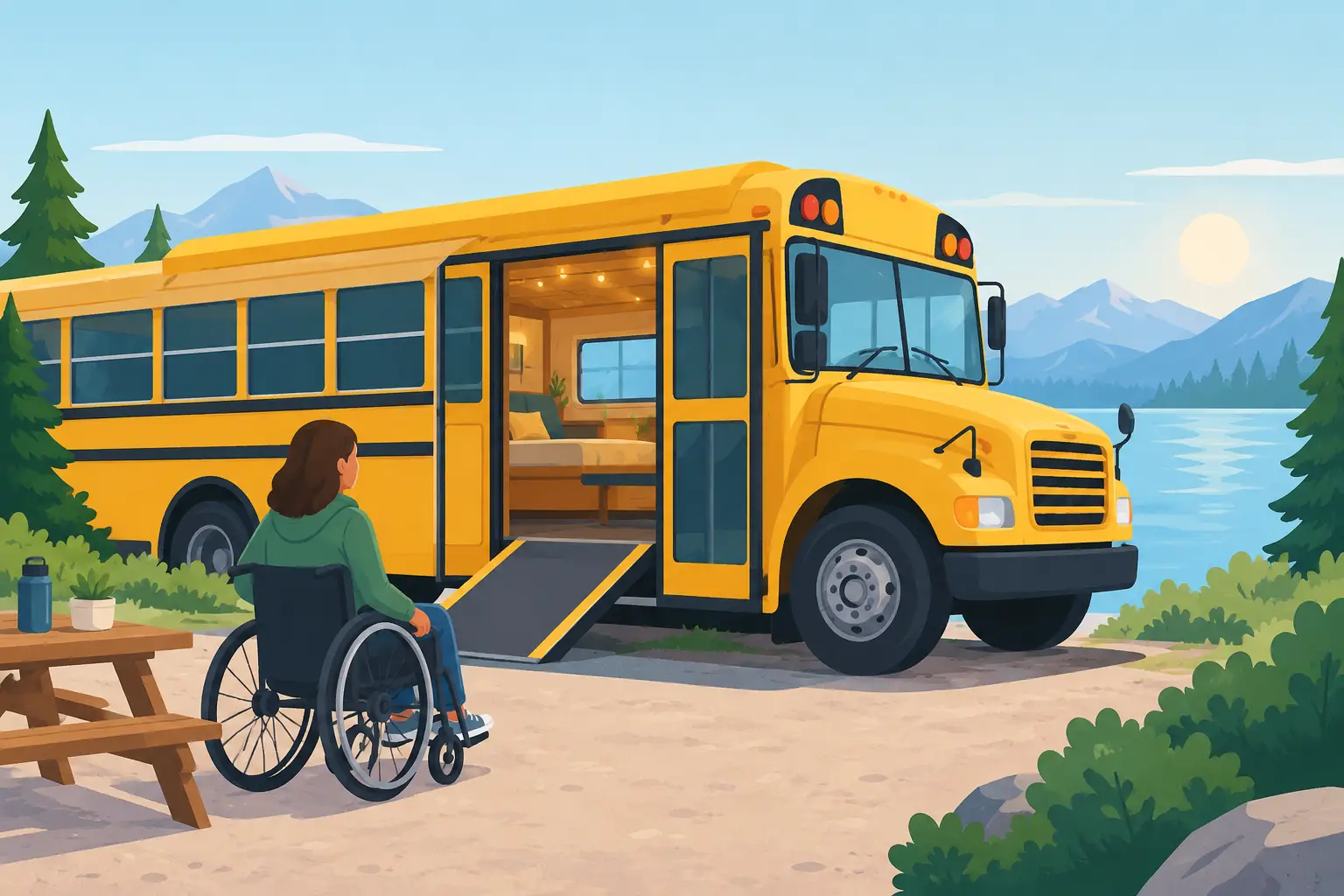
Ask about the surface and slope between the car and your accommodation, the number and height of any steps, door widths, threshold lips and the space beside the bed. If there is a ramp, find out its gradient and whether it is permanent. A ramp that looks fine in a photograph may be difficult in wet weather or unsuitable for a particular chair.
For bathrooms, ask whether the toilet, basin and shower are inside your unit or in a shared block. Check for grab rails, a level-access shower, shower seating, turning space and the height of fittings. “Wet room” is not automatically the same thing as an accessible wet room, particularly if there is a narrow doorway or nowhere for a wheelchair to turn.
It is also sensible to ask about parking. An accessible cabin is far less helpful if the nearest vehicle space is across a muddy field or down a steep track. Find out whether unloading close by is possible and whether staff can help with luggage if needed.
Do not judge a stay by the doorway alone
Glamping is full of wonderfully unconventional spaces: shepherd’s huts, cabins, safari tents, converted buses and even yellow submarines. That personality is exactly the point. But unusual accommodation can bring unusual layouts, from compact kitchens and raised sleeping areas to curved walls and narrow internal aisles.
That does not make it unsuitable. It just means the details matter. A converted vehicle may have a higher entrance or tighter turning circle than a purpose-built lodge, while a ground-floor cabin might be easier to enter but sit on uneven terrain. Ask for measurements, not assumptions, especially if the accommodation is a main attraction rather than a standard holiday cottage.
Look beyond physical access
The most memorable breaks let everyone feel included in the fun. Physical access is a major part of that, but it is not the only part.
Families may want to know whether there is safe lighting for night-time trips to the loo, a fridge for medication, somewhere to charge equipment, and a way to manage laundry or wet clothes. Guests with hearing impairments may need written arrival instructions, visual fire alerts or a preferred contact method. Those with visual impairments may benefit from a detailed verbal description of the layout, hazards and routes around the site.
For guests with allergies or respiratory conditions, check what is provided and what is nearby. Wood burners and fire pits can be wonderfully atmospheric, yet smoke may be a deal-breaker. Pets, strong cleaning products, feather bedding and heavily scented toiletries can matter too. A host may be able to make small adjustments, but they need notice.
If someone in your group needs a quieter experience, ask when the site is busiest and whether you can choose a more peaceful pitch or unit. It may be worth travelling midweek, outside school holidays or at a quieter time of year. The trade-off is that some facilities may run on reduced hours, so check that the things you genuinely need remain available.
Check the shared bits, not just the bed
A listing can have a lovely accessible bedroom while the rest of the holiday is far less straightforward. This is particularly relevant at glamping sites, where hot tubs, saunas, play areas, communal kitchens, wash blocks and outdoor dining spots may be shared.
If a premium extra is part of the plan, ask how you get to it and how it is used. Are there steps into the hot tub? Is there a hoist? Is the path lit after dark? Are changing facilities nearby? You may decide that a particular feature is not workable, but it is better to know before paying extra for a sauna session that becomes an awkward spectator sport.
Also ask about emergency arrangements. Where is the nearest accessible exit? Can a car reach the unit if urgent assistance is needed? Is there reliable mobile signal or Wi-Fi? These are not dramatic questions. They are sensible ones, especially in rural Somerset and Devon, where glorious countryside can sometimes mean patchy reception and wonderfully uneven ground.
Read reviews with a sharp eye
Guest reviews can reveal the details that polished descriptions miss. Search for comments about paths, parking, bathrooms, staff helpfulness, noise, lighting and how close facilities really are. A reviewer saying “a short walk” may be helpful context, but remember that everyone measures “short” differently.
Prioritise reviews from guests whose needs sound similar to yours, while keeping an eye on dates. Sites change. A new path, refurbished washroom or altered parking arrangement can make older feedback less useful.
Photos posted by guests can be especially revealing. They tend to show real-life luggage piles, weather conditions, slopes and the route from car to door. Just treat them as clues, not a final verdict. The best answer still comes directly from the host.
Book early and put it in writing
Accessible units and the most convenient layouts are often limited, so booking early gives you more choice. Once you have found a place that sounds right, confirm the key details in writing. Include your arrival needs, whether you require close parking, any equipment dimensions and any adjustments agreed with the host.
This is not about making a fuss. It is about giving the team a fair chance to prepare properly. A good host wants you focused on the exciting question – bus bunk, campfire or hot tub first? – rather than negotiating a surprise threshold with a weekend’s worth of bags.
Bring what helps you feel at home, but do not assume you must solve every access issue alone. Ask what can be provided, from a shower chair to a lower bed setup, before filling the boot with half the house. Equally, be ready for an honest “not at this property” if a quirky space cannot safely meet a particular need. A straight answer is far more valuable than a hopeful promise.
The right glamping stay is not defined by how unusual it looks on Instagram. It is the one where every member of your party can join the story – whether that is waking up in a school bus, watching the stars from a deck, or simply having a cuppa without a logistical battle. Choose the details that let you relax, then make room for the wonderfully daft bits that turn a night away into a proper memory.